
So what is That’s A Awful Lot Of Cough Syrup?
The rapper Desto Dubb launched That’s A Awful Lot Of Cough Syrup, an independent streetwear label headquartered in Los Angeles. ALOCS is the abbreviation it gives itself, appearing both in its press material and in product names such as the A.L.O.C.S. T-Shirt. The range is conventional on paper, taking in tees, hoodies, sweatpants, shorts, denim and accessories, and peculiar in practice, since the brand’s own name is the dominant graphic on most of it. A dozen different spellings lead shoppers to Pour Up streetwear it, including alocs clothing, cough syrup clothing and the shorthand awful lot of cough syrup. The legal entity is set down as THATS A AWFUL LOT OF… LLC, with no apostrophe and a trailing ellipsis. One detail is worth getting straight first: the brand writes “A Awful Lot”, not “An Awful Lot”, and the ungrammatical article is entirely deliberate. A lot of people type thats a awful lot of cough syrup without the apostrophe; only the version with “A” fits the registered mark.
Who makes it?
Desto Dubb, a rapper and entrepreneur from Watts in South Los Angeles, is the founder and the chief executive. What you are looking at is not a design studio with a rapper attached as a face, but a rapper’s business, run from the same network as his records. The music came years before the first shirt, and that accounts for much of how the company behaves. He has characterised other labels as built around an aesthetic, and his own as wrapped around himself instead. The result comes through in graphics that read like song titles and in drops pegged to events rather than fashion seasons.
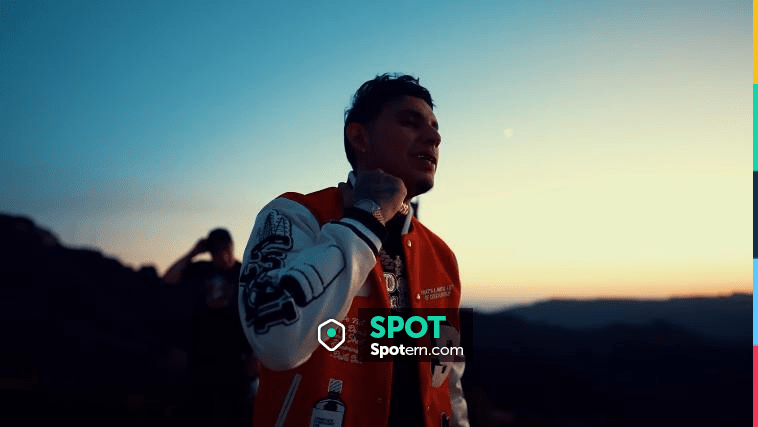
The United States trademark for the phrase is registered to Joshua Kashif Taylor, and posts on the brand’s own blog carry a matching byline. On his legal name the documentary record is thinner than the internet implies. Unsourced commercial sites carry other names, and those are best left alone, because for every practical purpose he is Desto Dubb.
Where did the name originate?
The phrase reached the public through a viral clip in which an officer’s line became the brand name, and Desto Dubb turned that line into a business. The anecdote is retold in nearly every write-up, and it deserves care, since material online claims the clip was staged and no primary transcript settles it. Documentation is confined to the commercial outcome rather than the encounter, and the trademark record records first use of the mark in November 2018.
The phrase refers to promethazine-codeine cough syrup, the prescription medicine known in rap slang as lean, and the company does not pretend otherwise. Medical and horror imagery runs across the product names, from Big Pharma and Promethazine Tour to Paralysis and Drankenstein, and it works as a graphic vocabulary rather than an instruction. It also declines to treat that as a selling point, and its own site runs a standing banner reading “! PLEASE DO NOT SIP DRANK AND SHOOT FIREARMS !”. The clothing is clothing, and the rest of this piece is about garments and prices.
When did the brand begin?
2018 is the year to use. First use of the mark is put in the trademark filing as November 2018, and an AllHipHop profile published in November 2023 describes the label marking its fifth anniversary. Some coverage dates the earliest selling during the pandemic, which conflicts with both markers, and the filing and the anniversary piece are the stronger pair. Most young streetwear brands cannot produce two independent pointers to one year.
Literally, it started with a van. Desto Dubb selling clothes out of a van in a parking lot in downtown Los Angeles is how the brand’s own about page has it, which makes it an origin the company tells on itself rather than one assembled by a reporter. The method is still summed up by that detail: small batches, direct contact with buyers, and drops announced through social accounts instead of wholesale calendars. The company runs an online store and physical retail by 2026, but the rhythm still looks closer to a van than a department store, with fresh batches landing every week or two.
What is actually on the rail?
The core is heavyweight cut-and-sew basics bearing jumbo screen prints front and back. Hoodies are the heavy end, the Classic Cough Syrup Hoodie listed at 16 oz organic cotton and hand-dyed in Los Angeles, while sweatpants use a 14 oz cotton and recycled polyester fleece. Names like King Of The Kill, Drankenstein, Juicebusters and Big Pharma run across the tees, while the Classic Cough Syrup T-Shirt is published at 6.5 oz organic cotton. Denim is kept thin, and the Double Cup Cargo Shorts, a 14 oz garment-dyed cargo short with double-layer back pockets, is the only piece in that collection in 2026.
The brand is given away less by any graphic than by two details: the signature yellow woven label, invoked again and again in its own product copy, and the published fabric weight. Fit guidance is set per garment and is not uniform, since the classic pieces are called true to size while the lightweight jersey tees say plainly that they run small. Sizing goes XS to 3XL on apparel, with denim and workwear sold by waist from 28 to 44, and neither a global size chart nor washing instructions is published.
What do the clothes cost?
Because they barely move, the core prices are easy to hold in your head. A tee is about $150 at the brand’s own store as of September 2026, a hoodie about $200 and sweatpants about $200. Denim shorts sit near $150, puffer jackets between roughly $200 and $250, belts and Dickies trousers around $250, and the Dickies jacket tops the range near $350. The other end offers a bandana at about $25, socks and boxers in the $50 to $70 band, and women’s pieces roughly $48 to $160.
Because streetwear prices and stock change constantly, take that ladder as a shape rather than a quote. That band sets cough syrup clothing at the upper end of independent streetwear, well above mall-tier graphic brands and far below European luxury houses. It doubles as an authenticity signal, because a $45 tee wearing this logo did not come from the company selling them at $150.
Where is it made, and where do you buy it?
Los Angeles, and the brand says so on the garments themselves. The product copy returns to “Made in Los Angeles”, with individual pieces described as hand-dyed and printed or screen-printed in the city rather than finished abroad. That same copy names the company a Black-owned business. Local small-batch production explains the numbers at these price levels, because a 16 oz cotton hoodie made here was never going to be a $60 garment.
The company maintains its own online store plus a small number of physical locations. 7669 Melrose Avenue in Los Angeles is the flagship, and the company also lists 312 West 5th Street in Los Angeles and 5410 Almeda Road in Houston. The company provides no store-locator page and no opening hours, so those addresses are worth confirming before travelling. Anything else claiming to be an outlet is best judged on the garment: the yellow woven label, the published fabric weight, the real price level, and whether the product name appears in the brand’s own catalogue.
A brand fact file
The table below assembles the details that survive checking and leaves out the ones that do not. Read from the brand’s own store in September 2026, the prices are hedged, because they move. Dates here come out of the trademark record and dated press coverage rather than brand mythology. The addresses are the ones the company lists on its own social profiles, with no published opening dates. For a contested claim such as the origin clip, the row records what is documented. Treat it as a starting point for your own checks rather than a final word.
| Item | Detail |
|---|---|
| Brand name, as the brand spells it | That’s A Awful Lot Of Cough Syrup |
| Abbreviated form | ALOCS, also styled A.L.O.C.S. |
| Frequently typed spellings | thats a awful lot of cough syrup, awful lot of cough syrup, alocs |
| Entity on the register | THATS A AWFUL LOT OF… LLC |
| Who founded it | Desto Dubb, rapper and entrepreneur |
| Founder’s home turf | Watts, South Los Angeles |
| Owner of record on the trademark | Joshua Kashif Taylor, as listed in the US trademark record |
| First recorded use of the mark | November 2018 |
| How it started | Sales from a van in a downtown Los Angeles parking lot |
| Identifying detail | Yellow woven label, plus jumbo front and back screen prints |
| Headline prices, September 2026 | Tees about $150, hoodies about $200, sweatpants about $200 |
| Manufacturing | Made in Los Angeles, billed in product copy as a Black-owned business |
| Flagship location | 7669 Melrose Avenue, Los Angeles |
| Additional listed locations | 312 West 5th Street, Los Angeles; 5410 Almeda Road, Houston |